Fifteen men’s World Championship finals have been played since 1996, and Sweden have been in every one of them. Finland have been the opponent twelve times. Ahead of Tampere, where a thirteenth Nordic final is the most likely outcome on 13 December, we ranked every Sweden-Finland final by drama and significance, then added the three finals that broke the pattern.
A quick word on method: drama is how the game itself unfolded (comebacks, overtime, late goals), significance is what it changed. A blowout can still rank high if it ended an era. Scores and scorers come from the sources linked in each entry; where a goal-by-goal record of an early final could not be verified, we have left it out rather than guess.
The head-to-head in finals
Before the rankings, the ledger. Sweden and Finland met in the 1996, 2000, 2002, 2006, 2008, 2010, 2012, 2014, 2016, 2018, 2020 (played in December 2021) and 2024 finals, according to the tournament’s results list. Going into Malmö, Sweden led the final head-to-head 7-4; Finland’s overtime win in 2024 made it 7-5.
That headline number hides a twist. Four of those twelve finals went beyond 60 minutes (2006, 2008, 2016 and 2024), and Finland won three of them. Sweden win the finals that are decided in regulation; Finland win the ones that are not.
The ranking: 1 to 6
1. 2008, Prague: Finland 7-6 Sweden (OT). Nothing else comes close. Finland were 4-0 up inside 16 minutes through Mika Kavekari, Rickie Hyvärinen, Lassi Vänttinen and Kari Koskelainen, then watched Sweden score six in a row, with Fredrik Djurling and Niklas Jihde both scoring twice. Vänttinen answered with two power-play goals in 71 seconds (54:40 and 55:51) to force overtime, and Tero Tiitu won it at 65:12, per Yle’s goal-by-goal account. It was Finland’s first world title after Sweden had won every edition since 1996, in front of 14,208 people. Everything about the modern rivalry starts here.
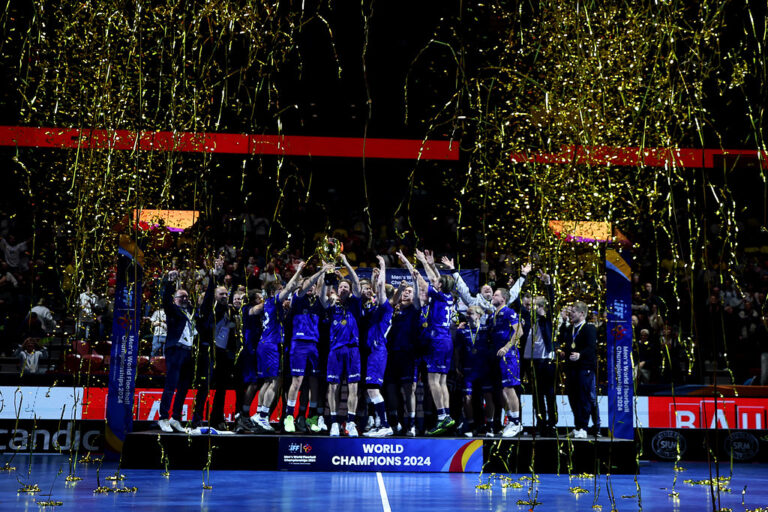
2. 2024, Malmö: Finland 5-4 Sweden (OT). Sweden, at home, led 3-0 by the 11th minute through Albin Sjögren, Johan Samuelsson and Emil Johansson, and Malte Lundmark made it 4-0 early in the second, as SVT reported. Then Heikki Iiskola went solo, Justus Kainulainen scored twice on the power play and Aaro Astala levelled, per MTV Uutiset. Robin Nilsberth hit the crossbar with about 20 seconds left in what was his last international, and Miska Mäkinen scored the golden goal nine minutes into overtime. MTV noted it was the first time Sweden had lost a final as hosts. It ranks second only because 2008 broke the monopoly; this one merely broke Swedish hearts. Our player ratings from that night still hold up.
3. 2016, Riga: Finland 4-3 Sweden (PSO). Sweden led 2-0 by 10:08 through Kim Nilsson and Tobias Gustafsson, Finland were level by 14:52, Gustafsson scored again and Peter Kotilainen equalised at 47:47. After a goalless overtime, Finland scored all four shootout attempts (Väänänen, Savonen, Kohonen, Kailiala) while Jarno Ihme stopped Henrik Stenberg and Johan Samuelsson, according to Yle’s retrospective. Sweden had been the reigning champions. Ihme, the hero of Riga, is now Finland’s goalkeeping coach.
4. 2006, Stockholm: Sweden 7-6 Finland (OT). The final that made 2008 necessary. At Globen, Finland led 5-3 in the last period and still lost in overtime, Yle recalls. The final score was 7-6, Sweden’s sixth straight title. For Finland it was the cruellest of the near misses, and the reason the Prague comeback two years later felt like justice rather than luck.
5. 2020 (played 2021), Helsinki: Sweden 6-4 Finland. Finland were going for three in a row at home and led 2-0 through Kainulainen and Eemeli Salin. Sweden scored three in the second (Rasmus Enström, Kim Nilsson, Linus Nordgren), Sjögren made it 4-2, and Kainulainen completed a hat-trick to tie it 4-4. Tobias Gustafsson’s 5-4 and Hampus Ahrén’s empty-netter settled it, per Kaleva. The crowd at Hartwall Arena was 12,508, says the IFF. A hat-trick in a lost final deserves a high ranking on its own.
6. 2014, Gothenburg: Sweden 3-2 Finland. Jani Kukkola scored for Finland 26 seconds in and Risto Töllikkö made it 2-0 before the first break. Mattias Samuelsson and Robin Nilsberth (on the power play) levelled, and Henrik Stenberg scored the winner in the third, The World Games reported, reportedly with only one hand on the stick. The lowest-scoring final of the rivalry, in front of 12,044 at Scandinavium.
The ranking: 7 to 12
7. 2018, Prague: Finland 6-3 Sweden. Alexander Rudd made it 2-2 early in the third, then Juha Kivilehto, Kotilainen and Nico Salo scored three in under three minutes (47′, 49′, 50′), according to SVT. The 16,276 crowd remains the WFC single-match record. Less drama than the scoreline suggests, but huge significance: Finland’s second successful title defence, after 2010.
8. 2010, Helsinki: Finland 6-2 Sweden. Mika Kohonen’s final. He scored three times (5:19, 34:55, 45:11) in front of a sold-out 13,276, finished the tournament with 9 goals and 7 assists, and was named best player, per Yle. Finland’s first back-to-back, and the clearest proof that 2008 was not a one-off.
9. 2002, Helsinki: Sweden 6-4 Finland. Finland’s first home final ended in defeat, as Yle reminds us, with Sweden winning 6-4. Significant as a marker: Finland could reach a final at home and still not close the gap.
10. 1996, Stockholm: Sweden 5-0 Finland. The original. No drama in the scoreline, but the 15,106 crowd at Globen stood as the single-match record for 22 years, until Prague 2018. It set the tone: a Swedish shutout in the first ever final.
11. 2000, Oslo: Sweden 5-3 Finland. Sweden’s third straight title, won 5-3. A competitive final, but one that left little trace.
12. 2012, Zurich: Sweden 11-5 Finland. The 16 goals make it the highest-scoring final ever, but it was over as a contest. Finland arrived chasing a third straight title after a 4-3 overtime semifinal win over Switzerland and were beaten out of sight. Significant only because it started Sweden’s next run of two titles.
The three finals without Finland
Sweden’s other three finals were all against Central European sides, and none was close. In 1998, in Prague, Switzerland reached their only final and lost 10-3. In 2004, in Zurich, Czechia made their first final and lost 6-4. And in 2022, back in Zurich, Czechia returned to the final 18 years later after an 11-3 rout of the hosts, while Sweden edged Finland 4-3 on penalties in the other semi. Sweden then won the final 9-3 for their tenth title, in front of 11,254 at the Swiss Life Arena.
The pattern is blunt. Against Sweden, the non-Nordic finalists have conceded 25 goals in three finals and scored 10. Against Finland, Sweden are 7-5.
What it means for Tampere
Three things stand out from the ranking. First, the close finals belong to Finland: 2008, 2016 and 2024 were all won in extra time or a shootout. Second, Sweden’s wins are often comebacks from early Finnish leads (2014 and 2021 both started 0-2). Third, the last three finals between them alternated winners (2018 Finland, 2021 Sweden, 2024 Finland), and there has never been a third Finnish title in a row.
Finland start as defending champions on home ice, Sweden as record champions. If they meet again at Nokia Arena, our money is on it being tight; history says that is good news for Finland. For a refresher on how both sides got to the last final, read our 2024 final preview.
Which final would you put at number one, and where does 2006 rank for you? Tell us on Instagram.
All our coverage of the tournament lives on the WFC 2026 page.